
To balance on a Niphean Paddle Board, center your feet near the carry handle, bend your knees, and look ahead. Keep your paddle touching the water whenever possible, then use gentle forward strokes to create dynamic stability. A 2026 independent review rated Niphean’s stability 8.0 out of 10, highlighting its beginner-friendly platform. Proper setup still matters because board pressure, body position, water conditions, and load affect stability. Whether you are completely new to SUP or refining your technique, the Niphean Paddle Board becomes easier to manage with deliberate practice. This guide explains exactly where to stand, how to recover, and which mistakes to avoid.
Key Takeaways
- Center your stance around the board’s carry handle for better weight distribution.
- Keep your feet hip-width apart and maintain soft, responsive knees.
- Look toward the horizon instead of watching your feet or the board.
- Use the paddle as a third point of contact during unstable moments.
- Start on calm water before attempting wind, waves, currents, or boat wake.
- Drop to your knees early when conditions exceed your current balance skills.
Why Niphean Paddle Board Balance Feels Different
A paddle board never stays completely still because water constantly shifts beneath its hull. Therefore, successful balance requires continuous micro-adjustments rather than a perfectly frozen stance. Your ankles, knees, hips, and core constantly respond to small board movements. The goal involves controlling those movements without fighting the board.
Niphean boards generally emphasize stability through wide inflatable designs and beginner-oriented all-around shapes. That design gives newer paddlers a forgiving platform, especially during recreational sessions. However, stability cannot compensate for poor positioning or unsuitable water conditions. Your technique still determines how confidently you control the board.
Understand Dynamic Balance
Many beginners make one major mistake by trying to stand completely still. Instead, let your lower body respond naturally while keeping your upper body relatively relaxed. Your knees should absorb movement rather than transferring every ripple into your shoulders.
Forward movement also helps because steady paddle strokes create directional momentum. Consequently, standing while drifting can feel harder than standing while gently moving forward. Once upright, begin controlled strokes instead of waiting for perfect stillness.
Prepare Your Niphean Board Before Standing
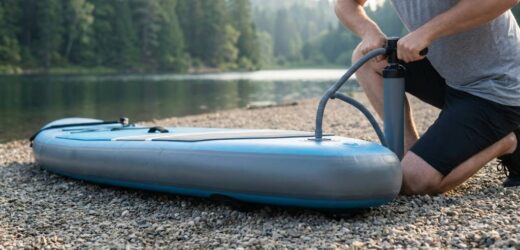
Good balance begins before your feet touch the deck. First, inflate the board according to its recommended pressure and check that the structure feels firm. An underinflated inflatable SUP can feel softer and less predictable beneath your weight.
Next, secure the fin and inspect the leash before entering deeper water. Remove unnecessary gear because additional weight changes how the board sits in the water. Finally, position heavier equipment near the center instead of concentrating weight at one end.
Check Your Total Load
Your total load includes your body weight, clothing, water, equipment, and personal items. Staying within the board’s recommended capacity helps preserve its intended stability. A heavily overloaded board can sit lower and respond differently to your movements.
Therefore, do not judge balance only by your body weight. Consider everything you carry during the session. A properly loaded board gives your technique a much fairer opportunity to work.
Choose Calm Water First
Start on calm, sheltered water with minimal wind and little current. Flat conditions allow you to learn the board’s movement without unnecessary environmental challenges. Shallow water can also make early falls and remounting less intimidating.
However, shallow does not mean completely risk-free. Check the bottom for rocks, submerged objects, vegetation, and other hazards before launching. Wear appropriate safety equipment and stay within conditions you can confidently manage.
Find the Correct Standing Position
Your first standing position should place your body over the board’s most stable section. The carry handle provides a useful reference because it usually sits around the board’s midpoint. Position both feet parallel and approximately hip-width apart around that central area.
Avoid standing too close to either the nose or tail. Excessive forward pressure can push the nose downward and affect tracking. Similarly, excessive rearward pressure can make the nose rise and reduce predictable movement.
Keep Your Feet Relaxed
Spread your weight evenly across both feet instead of favoring one side. Keep your toes relaxed rather than gripping the deck with them. Excessive foot tension usually travels upward and creates unnecessary stiffness throughout your body.
Instead, imagine your feet connecting naturally with the deck. Let your ankles make small corrections while your knees absorb larger movements. This relaxed connection helps you respond faster when the board shifts.
Bend Your Knees
Never lock your knees while standing on a moving paddle board. Maintain a slight bend that allows your legs to act like suspension. When the board moves, your knees should respond before your shoulders overreact.
If the water becomes choppy, lower your stance slightly. A lower center of gravity makes sudden movements easier to control. Avoid crouching excessively because extreme positions can restrict your paddling movement.
Use Your Eyes to Improve Stability
Your gaze strongly influences your balance on a paddle board. Looking down at your feet often causes your head and shoulders to move forward. That movement can shift your center of gravity and increase unnecessary wobbling.
Instead, keep your head upright and look toward the horizon. Choose a distant object such as a shoreline feature or fixed landmark. Your visual system can then provide a stable reference while your lower body handles board movement.
This technique becomes especially useful when you feel nervous. Beginners often stare at the deck immediately after standing because they want to monitor their feet. Resist that habit and trust your stance once your feet are correctly positioned.
Stand Up Without Losing Your Balance
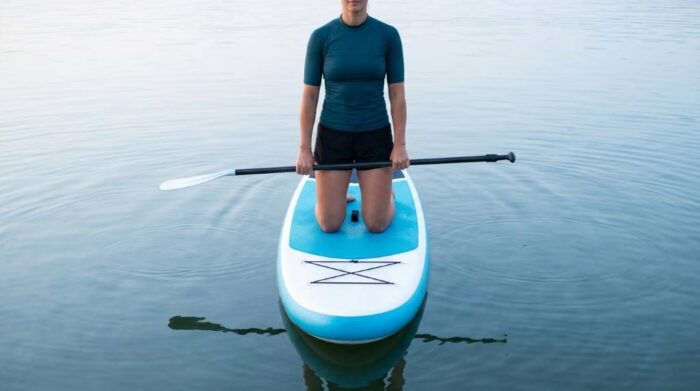
Start every attempt from a kneeling position rather than trying to jump directly onto your feet. Kneeling lowers your center of gravity and lets you feel how the board responds. Paddle gently for several strokes before attempting to stand.
Place your hands near the board’s sides for support. Then bring one foot forward into the approximate position of your first knee. Follow with the other foot while keeping your weight centered over the board.
Raise your chest first while maintaining bent knees. Once your torso becomes upright, gradually extend your legs into the standing position. Keep the paddle available for support instead of leaving it floating beside you.
Use This Five-Step Transition
- Start kneeling near the board’s center.
- Paddle gently until the board moves predictably.
- Place your hands on the deck for support.
- Bring your feet forward one at a time.
- Rise smoothly while keeping your knees bent.
Do not rush the final movement. A controlled transition gives you time to notice unwanted weight shifts. If the board begins rocking heavily, return to your knees and reset.
Use the Paddle as Your Balance Tool
Your paddle does more than propel the board forward. When the blade touches the water, it creates another point of support. That additional contact can help you recover from small balance errors.
Therefore, avoid holding the paddle completely above the water when you feel unstable. Instead, place the blade gently into the water and maintain controlled pressure. This technique gives your body another reference point while the board moves.
Once you regain stability, resume smooth forward strokes. Avoid aggressive strokes because sudden force can rotate the board unexpectedly. Smooth strokes keep your momentum predictable and reduce unnecessary body movement.
Adjust Your Paddle Correctly
A paddle that feels too short or too long can complicate your posture. Set the paddle so you can maintain an upright torso without excessively bending your elbows. Your exact adjustment depends on your height, paddling style, and personal comfort.
During normal strokes, keep your upper body relaxed. Rotate through your torso instead of relying entirely on your arms. Efficient movement reduces fatigue, which can indirectly improve balance during longer sessions.
Master the Three Main Balance Corrections
Most balance problems respond to three simple corrections. First, lower your center of gravity by bending your knees. Second, move your hips rather than throwing your shoulders toward the opposite side.
Third, use your paddle blade for immediate support. These corrections work together because they stabilize your body without forcing the board completely still. Practice them individually before combining them during longer paddling sessions.
When You Start Wobbling
- Soften your knees: Let your legs absorb the board’s movement.
- Lower your stance: Bring your center of gravity closer to the deck.
- Plant the paddle: Use the blade as temporary support.
- Keep your eyes forward: Maintain a stable visual reference.
- Continue gentle movement: Use controlled strokes instead of freezing.
- Kneel if needed: Reset before the wobble becomes an uncontrolled fall.
Do not fight every small movement you feel beneath your feet. Instead, allow minor rocking while preventing it from becoming a large weight shift. Balance improves when your corrections remain small and timely.
Common Niphean Paddle Board Balance Mistakes
| Mistake | Why It Causes Problems | Better Approach |
|---|---|---|
| Standing too far forward | It pushes the nose downward. | Return toward the center. |
| Locking your knees | Rigid legs amplify board movement. | Keep your knees softly bent. |
| Looking at your feet | Your upper body tends to lean forward. | Focus on the horizon. |
| Gripping the paddle tightly | Tension spreads through your arms and shoulders. | Use a relaxed grip. |
| Holding the paddle above water | You lose an important support point. | Keep the blade near the water. |
| Standing completely still | You lose useful forward momentum. | Begin smooth strokes quickly. |
| Practicing in strong wind | Environmental forces overwhelm developing skills. | Choose sheltered water. |
| Carrying excessive gear | Extra weight changes board behavior. | Pack only necessary equipment. |
Practice Drills That Build Real Balance
Improvement comes faster when you practice specific movements instead of simply paddling longer. Start with short sessions that focus on one technique at a time. Ten focused minutes can teach more than an hour of unfocused wobbling.
Kneel-to-Stand Repetitions
Begin in calm water and repeat the standing transition several times. Stand for a few strokes, return to your knees, and repeat. This drill teaches your body to change levels without creating excessive board movement.
Keep each repetition controlled rather than chasing speed. Eventually, the movement should feel automatic. That familiarity becomes valuable when waves or wind suddenly disturb your stance.
Controlled Weight Shifts
Stand near the center and slowly shift your weight toward your heels. Then return to neutral and repeat toward your toes. Keep each movement small enough to maintain control.
Next, practice gentle side-to-side shifts through your hips. These movements teach you how much correction the board needs. Over time, you will recognize instability earlier and respond with smaller adjustments.
Eyes-Forward Practice
Paddle slowly while focusing on a fixed point ahead. Resist the urge to check your feet after every stroke. This drill trains your visual system to support balance without constant deck monitoring.
Dry-Land Balance Practice
You can reinforce basic balance skills away from the water. Practice single-leg stands, controlled squats, and slow lateral weight shifts. These exercises develop coordination that supports your on-water movements.
A balance board can provide an additional challenge, but you do not need specialized equipment. Consistent bodyweight practice can develop useful control before your next paddling session. Always prioritize safe surfaces and controlled movements.
How to Handle Wind, Waves, and Boat Wake
Once calm-water balance becomes comfortable, gradually introduce more challenging conditions. Do not jump directly from flat water into strong wind or large waves. Progression works best when each new challenge remains manageable.
When waves approach from the front, keep the board pointed toward them whenever practical. Sideways wave impact can create more abrupt rolling movement. Lower your stance and keep your paddle ready for additional support.
Wind requires additional planning because it can move your board faster than expected. If conditions deteriorate, kneel down and paddle toward sheltered water. Returning early represents good judgment, not poor skill.
Know When to Stop Standing
Kneeling provides a valuable stability option when conditions become difficult. Lower your body before the board reaches a point where recovery becomes uncertain. This simple decision can prevent a minor wobble from becoming an uncontrolled fall.
Experienced paddlers also use lower positions when conditions demand them. Therefore, kneeling should become part of your normal skill set rather than something embarrassing. The strongest technique includes knowing when standing provides control and when it does not.
What to Do If You Fall
Falls happen during paddle boarding, especially while learning. Try to fall away from the board rather than landing directly against its hard components. Keep your paddle secure without placing yourself in an awkward position.
After entering the water, stay calm and locate your board. Use the leash appropriately if conditions and equipment allow. Then return to the board using a controlled remount technique rather than attempting an immediate standing recovery.
Once back aboard, kneel and regain your breathing rhythm. Check your surroundings before standing again. If you feel fatigued or conditions have changed, ending the session may be the smarter choice.
A Simple Progression for New Niphean Paddlers
| Stage | Main Goal | When to Progress |
|---|---|---|
| Stage 1 | Balance while kneeling | You can paddle comfortably without excessive rocking. |
| Stage 2 | Controlled standing | You can stand without immediately grabbing the board. |
| Stage 3 | Forward paddling | You can maintain balance during smooth strokes. |
| Stage 4 | Weight shifting | You can correct small wobbles without panic. |
| Stage 5 | Moderate conditions | You can handle gentle wind and small waves confidently. |
Progress through these stages at your own pace. Some paddlers may move through several stages during one session, while others need multiple outings. Consistency matters more than speed.
Frequently Asked Questions
Is a Niphean Paddle Board easy for beginners to balance on?
Yes, its stable inflatable design can provide a forgiving platform for beginners who use correct technique.
Where should I stand on a Niphean Paddle Board?
Stand near the center, around the carry handle, with your feet parallel and approximately hip-width apart.
Why do I keep wobbling on my Niphean paddle board?
Common causes include poor positioning, stiff knees, incorrect loading, weak technique, or challenging water conditions.
Should I look down while balancing on a paddle board?
No, keep your gaze toward the horizon because looking down can shift your posture and reduce stability.
What should I do when my Niphean paddle board starts tipping?
Bend your knees, lower your body, place the paddle blade in the water, and kneel if necessary.
Final Thoughts
Balancing on a Niphean Paddle Board becomes much easier when you stop trying to eliminate every movement. Center your stance, relax your body, keep your gaze forward, and let your knees absorb the water’s motion. Then use your paddle and forward momentum to create additional stability.
Most importantly, build your confidence through controlled repetition rather than difficult conditions. Start on calm water, practice the drills above, and progress gradually as your reactions improve. Take your Niphean board onto suitable water, apply these techniques, and make your next session your most stable one yet.