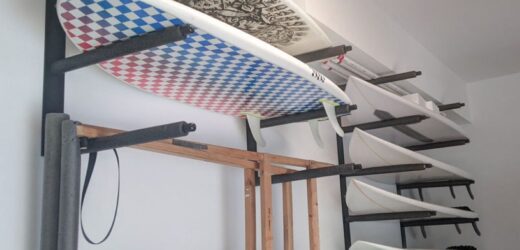
The salty air whips through your hair, the sun warms your skin, and the waves beckon. You’re ready to hit the surf, but first, you need to get your board to the beach. Transporting your surfboard safely and securely is crucial, not only to protect your prized possession but also to ensure the safety of yourself and other drivers. This comprehensive guide will walk you through the ins and outs of racking a surfboard on a car, covering everything from choosing the right rack to securing your board for a smooth and worry-free ride.
Choosing the Right Surfboard Rack

Before you can even think about loading up your board, you need the right rack system. There are two main types of surfboard car racks: soft racks and hard racks. Both have their own advantages and disadvantages, and the best choice for you will depend on your budget, the type of car you have, and how often you surf.
Soft Racks:
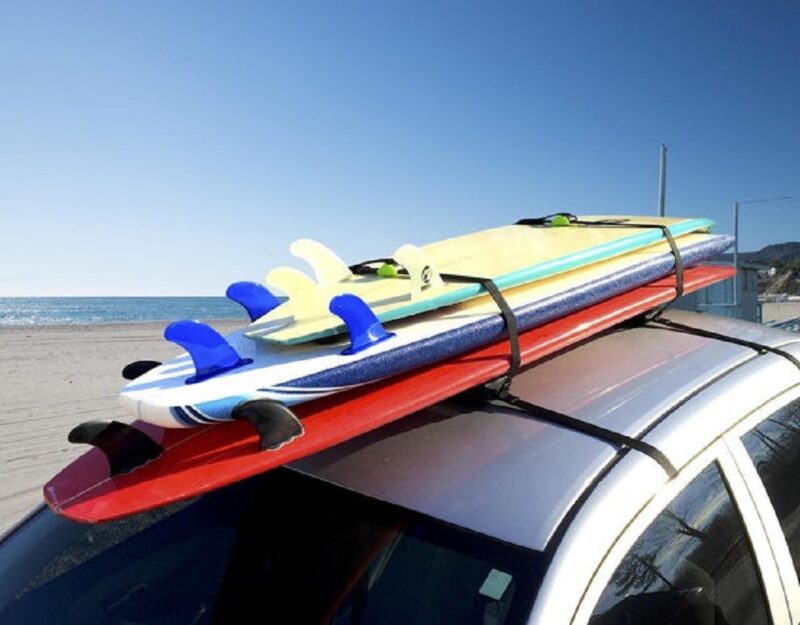
Soft racks are the most affordable and versatile option. They consist of padded straps that go over your car’s roof and attach to the inside of the vehicle. These racks are easy to install and remove, making them ideal for occasional surfers or those who don’t want to leave racks on their car permanently.
Pros:
- Affordability: Soft racks are generally the most budget-friendly option.
- Versatility: They can be used on almost any vehicle, even those without roof rails.
- Portability: Easy to store when not in use.
- Ease of installation: No tools required, quick setup and removal.
Cons:
- Less secure: Not as secure as hard racks, especially at high speeds or in strong winds.
- Potential for damage: Can potentially damage your car’s paint or roof if not used correctly.
- Limited capacity: Typically can only carry 2-3 boards.
Hard Racks:
Hard racks are more robust and provide a higher level of security for your surfboards. They consist of two crossbars that attach to your car’s roof rails or to a base roof rack system. You then attach specialized surfboard carriers to the crossbars.
Pros:
- Increased security: Offer a more secure hold on your boards, even in challenging conditions.
- Higher capacity: Can carry more boards than soft racks.
- Aerodynamic: Some models are designed to minimize wind noise and drag.
- Compatibility with other accessories: Can be used with other roof rack accessories like bike racks and cargo boxes.
Cons:
- Higher cost: Hard racks are generally more expensive than soft racks.
- Installation: May require some tools and time to install.
- Permanence: Less convenient to remove and store.
Choosing the right rack for you:
- Frequency of surfing: If you surf frequently, investing in a hard rack is a good idea.
- Number of boards: Consider how many boards you need to transport regularly.
- Type of vehicle: Ensure the rack system is compatible with your car.
- Budget: Soft racks are a more affordable option, while hard racks offer greater security and features.
Step-by-Step Guide to Racking a Surfboard
Once you’ve chosen your rack system, it’s time to learn how to properly secure your surfboard. Here’s a step-by-step guide for both soft racks and hard racks:
Soft Racks:
- Clean your car’s roof: Remove any dirt or debris that could scratch your car or the surfboard.
- Position the pads: Place the padded straps on your car’s roof, ensuring they are evenly spaced and aligned with the doors.
- Run the straps through the car: Open the car doors and run the straps through the vehicle, securing them to the anchor points on the opposite side.
- Place the surfboard on the pads: Position your surfboard(s) fin up on the padded straps.
- Secure the straps: Tighten the straps securely, ensuring the board is snug and won’t move around.
- Attach the tail strap (optional): For added security, use a separate strap to secure the tail of the board to your car’s bumper or tow hook.
Hard Racks:
- Install the crossbars: If you don’t already have crossbars, install them according to the manufacturer’s instructions.
- Attach the surfboard carriers: Slide the surfboard carriers onto the crossbars and tighten them in place.
- Place the surfboard on the carriers: Position your surfboard(s) fin up on the carriers.
- Secure the straps: Use the straps provided with the carriers to secure the board to the rack. Make sure the straps are tight and the board is stable.
- Lock the carriers (optional): Some surfboard carriers come with locks to deter theft.
General Tips for Racking Your Surfboard:

- Use a nose guard: A nose guard will protect the nose of your board from getting dinged during transport.
- Pad the rails: If you’re carrying multiple boards, use padding between the rails to prevent them from rubbing against each other.
- Double-check everything: Before you hit the road, double-check that all straps are secure and the board is firmly attached to the rack.
- Drive carefully: Avoid sudden braking or sharp turns, especially at high speeds.
- Check your board periodically: Stop periodically to check that your board is still secure, especially on long drives.
Reviews of Popular Surfboard Car Racks
Soft Racks:
- FCS Premium Soft Racks: These racks are known for their durability and ease of use. They feature thick padding to protect your board and car, and they come with a handy storage bag.
- Pros: Durable, easy to use, comes with a storage bag.
- Cons: Can be a bit pricey compared to other soft racks.
- Ocean & Earth Double Soft Racks: A budget-friendly option that’s perfect for occasional surfers. These racks are lightweight and easy to install, and they can carry up to two shortboards.
- Pros: Affordable, lightweight, easy to install.
- Cons: Not as durable as some other soft racks.
Hard Racks:
- Thule AeroBlade Edge Crossbars with Thule SUP Taxi XT Carriers: This premium system is perfect for serious surfers. The aerodynamic crossbars reduce wind noise, and the SUP Taxi XT carriers can accommodate a wide range of board sizes and shapes.
- Pros: Aerodynamic, secure, versatile, can carry large boards.
- Cons: Expensive.
- Yakima JetStream Crossbars with Yakima Surfboard Carrier: Another excellent hard rack system. The JetStream crossbars are quiet and efficient, and the Yakima Surfboard Carrier is easy to use and provides a secure hold on your board.
- Pros: Quiet, efficient, easy to use, secure.
- Cons: Can be challenging to install.
Pros and Cons of Racking a Surfboard
Pros:
- Convenience: You can easily transport your board to any surf spot.
- Freedom: No need to rely on public transportation or rentals.
- Protection: A good rack system will protect your board from damage during transport.
- Cost-effective: Owning your board and transporting it yourself can be cheaper than renting in the long run.
Cons:
- Increased fuel consumption: Carrying a surfboard on your roof can increase wind resistance and fuel consumption.
- Potential for damage: If not properly secured, your board could be damaged during transport.
- Theft: Surfboards can be a target for thieves, especially if left unattended on a car rack.
Frequently Asked Questions (FAQ)
Q: Can I leave my surfboard on my car rack overnight?
A: It’s not recommended to leave your surfboard on your car rack overnight. This increases the risk of theft and potential damage from weather or vandalism.
Q: How fast can I drive with a surfboard on my car?
A: It’s generally recommended to drive below the speed limit and avoid strong winds when carrying a surfboard on your car. Always follow the manufacturer’s instructions for your specific rack system.
Q: Can I carry other things on my roof rack with my surfboard?
A: Yes, but be sure to distribute the weight evenly and ensure everything is securely fastened.
Q: How do I prevent my surfboard from getting wax on my car?
A: Use a board bag or towel to cover your board before placing it on the rack.
Q: What should I do if my surfboard comes loose while driving?
A: If you notice your surfboard is loose, pull over to a safe location as soon as possible and re-secure it.
Q: Do I need any special tools to install a surfboard car rack?
A: Soft racks typically don’t require any tools. Hard racks may require some basic tools like a screwdriver or wrench. Always refer to the manufacturer’s instructions.
Q: Can I rack a surfboard on a car without roof rails?
A: Yes, you can use soft racks or a hard rack system with a base roof rack that attaches to your car’s door frames.
Q: How do I choose the right size surfboard carrier for my board?
A: Surfboard carriers come in different sizes to accommodate different board widths. Measure the width of your board and choose a carrier that’s slightly wider.
Q: How do I clean my surfboard car rack?
A: You can clean your car rack with mild soap and water. Avoid using harsh chemicals or abrasive cleaners.
By following these tips and guidelines, you can safely and confidently transport your surfboard to your favorite surf spot. Remember to always prioritize safety and take the time to properly secure your board before hitting the road. Now, go catch some waves!