Key Takeaways
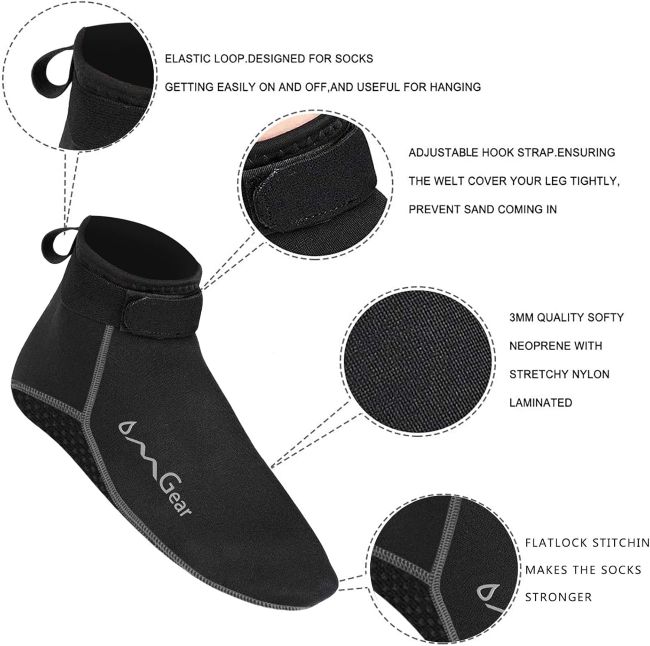
- OMGear water socks use 3mm neoprene with a 4-way stretchy nylon laminate, protecting feet from cuts, punctures, scratches, and cold water.
- An adjustable ankle strap and elastic heel loop combine to seal out sand while making the socks easy to put on, remove, and hang up to dry.
- A reinforced, rubber-printed sole adds real abrasion resistance, though independent divers specifically note these socks aren’t a substitute for dedicated dive boots on genuinely rocky terrain.
- Flatlock stitching keeps seams durable and stretchy, though it’s a construction style intended for warm-to-moderate conditions rather than cold winter water.
- Independent reviewers describe the fit as running true to size, with strong stretch that improves further once wet.
- They’re widely regarded as excellent for snorkeling, warm water diving, and beach use, with the caveat that abrasive surfaces like rough concrete or sharp rocks can wear them down faster than intended.
The gap between bare feet and full dive boots is where water socks live, offering enough protection to handle sand, shells, and mild abrasion without the bulk, weight, or cost of true wetsuit footwear. Getting that balance right means choosing a sock that’s thick enough to genuinely protect your feet but still thin enough to keep that close-to-barefoot feel divers and snorkelers specifically want.
OMGear’s 3mm neoprene water socks aim squarely at that middle ground, and independent reviews from both general water sports users and dedicated diving communities give a clear, consistent picture of where they excel. Understanding both the manufacturer’s claims and how independent testers describe real-world performance helps set the right expectations before you buy.
Product at a Glance
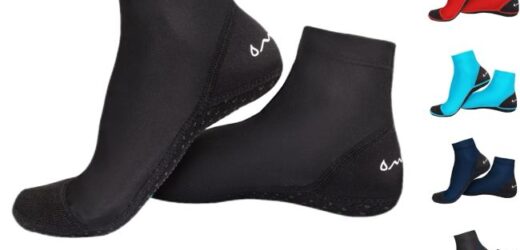
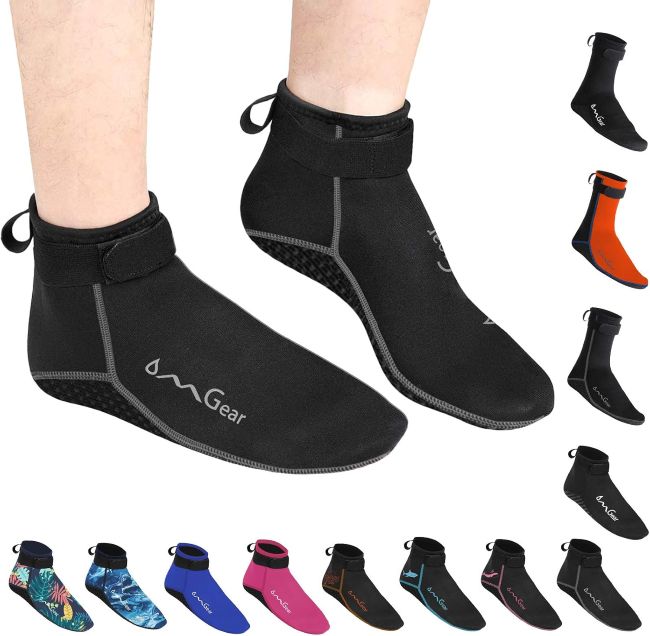
OMGear water socks
| Attribute | Details |
|---|---|
| Material | 3mm neoprene, 4-way stretch nylon laminate |
| Cut Style | Low cut and high cut versions available |
| Closure | Adjustable ankle strap |
| Sole | Reinforced, rubber-printed, anti-slip |
| Stitching | Flatlock (non-glued) |
| Best For | Snorkeling, warm water diving, beach activities |
Detailed Review
Why This Product Stands Out
At 3mm thick, OMGear’s neoprene strikes a genuine balance between real foot protection and a close-to-barefoot feel, according to independent diving community reviews that specifically praise this model as having no major flaws for its intended use. That combination of protection and flexibility matters directly for snorkelers and warm water divers who want a thin, comfortable layer between their foot and fin rather than the bulkier feel of full dive boots.
The 4-way stretchy nylon laminate reinforces this flexibility further, and independent hands-on reviewers specifically note the material stretches even better once wet, a genuinely useful real-world confirmation beyond the manufacturer’s own description.
Key Specifications
| Spec | Value |
|---|---|
| Thickness Options | 3mm and 5mm available |
| Ankle Feature | Adjustable strap plus elastic heel loop |
| Sole Type | Reinforced rubber printing |
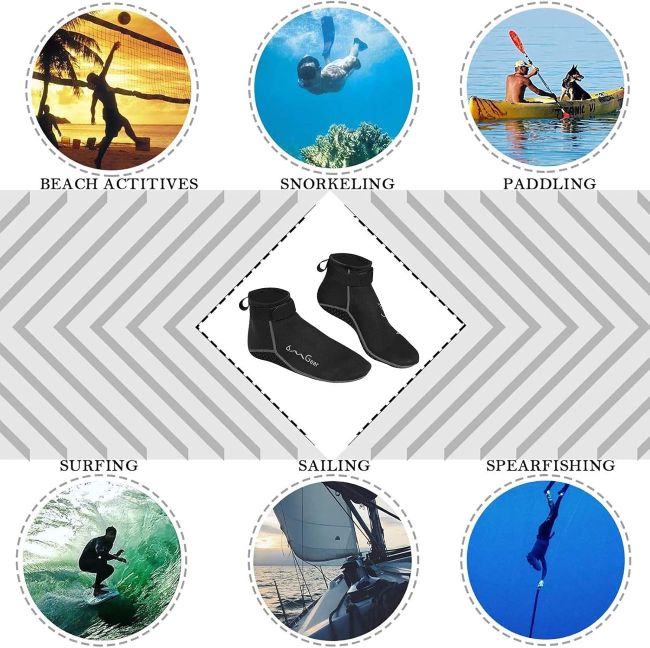
| Compatible Activities | Beach volleyball, snorkeling, diving, swimming, kayaking |
| Care Method | Rinse after use, air dry only |
| Sizing | Runs true to size, per independent reviewers |
Design & Build Quality
The adjustable ankle strap is specifically designed to seal the welt tightly around your ankle, keeping sand and small debris from working their way inside during beach or water activities. The elastic heel loop adds two practical functions at once: making the socks easier to pull on and off, and giving you a simple way to hang them up on a fin or wall to dry between uses.
Independent reviewers with foot sensitivity conditions, including one reviewer managing peripheral neuropathy, specifically praised the socks for protecting against the discomfort of walking through mush, vegetation, small shells, and rocks along shorelines, a meaningful real-world validation for anyone with similar foot protection needs.
Materials & Construction
Flatlock stitching, used without gluing, keeps seams durable and stretchy, and OMGear specifically notes this construction style suits spring, summer, and fall conditions rather than genuinely cold winter water, where glued blind stitching performs better by minimizing water intrusion. That’s a meaningful, honest distinction worth understanding: flatlock stitching prioritizes flexibility and comfort over the maximum water-sealing a colder-water sock would need.
Performance
The reinforced, rubber-printed sole resists abrasion and tearing while providing anti-slip traction on sandy, rugged, or slippery surfaces. However, independent reviews offer mixed feedback on its performance over rocky terrain. One detailed diving community review says these socks need additional dive boots for rocky surfaces, while another reviewer comfortably walked along a rocky shoreline with small shells without any issues.
That apparent discrepancy likely comes down to the specific terrain involved, loose gravel or shell-strewn sand is a different challenge than sharp, jagged rock, and it’s worth erring toward caution on genuinely rugged terrain rather than assuming full protection. Real buyer feedback also specifically recommends wearing sandals or water shoes over these socks when walking on abrasive surfaces like rough concrete pool decks, to prevent premature sole wear.
Comfort / Usability
Independent reviewers consistently describe the fit as running true to size, with one specifically noting the socks worked comfortably even for a partner with wider ankles, crediting the stretch and Velcro strap design for that adaptable fit. The near-barefoot feel while still wearing meaningful protection is repeatedly highlighted as the standout comfort quality across multiple independent sources.
Features Explained
Adjustable ankle strap with elastic heel loop matters because it solves two separate problems at once, keeping sand and debris out during use, and making the socks genuinely easy to remove and hang dry afterward, rather than fighting with a tight, strapless design.
Flatlock (non-glued) stitching prioritizes flexibility and stretch, making it suitable for warm-to-moderate water conditions. However, buyers who need cold-water performance should consider a different construction better suited to lower temperatures.
Reinforced rubber-printed sole matters because it adds genuine walking protection on sand and moderate terrain, though independent reviews suggest layering additional footwear over these socks for truly rocky or abrasive surfaces.
Real World Usage
A common use case, directly reflected in independent reviews, is snorkeling or warm water diving where these socks serve as a comfortable, protective layer between foot and fin without the bulk of full dive boots. Beachgoers also use them specifically to keep sand out during volleyball, walking, or general beach activities, while some reviewers use them for practical foot protection needs, like post-surgical care or peripheral neuropathy, where a barrier against sand and debris matters medically as much as recreationally.
Benefits
- Genuine balance of protection and near-barefoot feel for snorkeling and diving
- Adjustable strap and heel loop combine sand protection with easy on/off use
- Stretch improves further once wet, per independent reviewer feedback
- True-to-size fit with meaningful flexibility for different foot and ankle shapes
- Effective at keeping sand out during beach activities
Limitations
- Not a substitute for dedicated dive boots on genuinely rocky or sharp terrain, per diving community reviews
- Flatlock stitching suits warm-to-moderate conditions rather than cold winter water
- Some buyers note the socks can be a bit difficult to remove
- Wearing sandals over the socks on abrasive surfaces like concrete is recommended to prevent premature sole wear
Who Should Buy It?
These socks fit snorkelers, warm water divers, and beachgoers who want genuine foot protection without the bulk of full dive boots. They’re also a strong practical choice for anyone needing a protective barrier against sand and mild abrasion for medical or sensitivity reasons.
Who Should Avoid It?
Divers or water sports enthusiasts regularly encountering genuinely rocky, sharp terrain should pair these socks with dedicated dive boots rather than relying on them alone, per independent diving community guidance. Cold water swimmers or divers should consider glued blind-stitched neoprene footwear instead, since flatlock stitching isn’t optimized for minimizing cold water intrusion.
Comparison with Similar Products
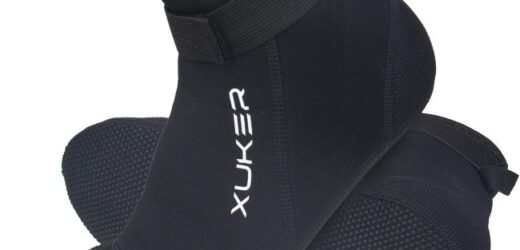
Compared to XUKER’s 3mm neoprene water socks, a frequently listed alternative in the same category, OMGear distinguishes itself through its wide range of available designs and sizes, along with consistently positive independent reviews describing few if any major flaws. Compared to full neoprene dive boots, OMGear’s water socks trade some rugged-terrain protection for a significantly closer-to-barefoot feel, better suited to snorkeling and moderate beach conditions than technical diving on sharp rock.
Key Features Table
| Feature | Why It Matters |
|---|---|
| 3mm Neoprene with 4-Way Stretch | Balances real foot protection with a near-barefoot feel |
| Adjustable Ankle Strap | Seals out sand and debris during use |
| Elastic Heel Loop | Simplifies removal and provides an easy hang-dry option |
| Reinforced Rubber Sole | Adds abrasion resistance and anti-slip traction |
| Flatlock Stitching | Prioritizes flexibility and stretch for warm-to-moderate water |
| True-to-Size Fit | Confirmed by independent reviewers across different foot shapes |
Pros & Cons Table
| Pros | Cons |
|---|---|
| Genuine protection with a near-barefoot feel | Not a substitute for dive boots on sharp, rocky terrain |
| Easy on/off with adjustable strap and heel loop | Flatlock stitching not ideal for cold winter water |
| True-to-size fit with strong wet-stretch | Can be a bit difficult to remove, per some buyers |
| Effective at keeping sand out during beach use | Abrasive surfaces like concrete wear soles faster |
Cleaning Tips
Rinse the socks for at least three to four minutes with clean, fresh water immediately after every use to remove salt, sand, and chlorine residue. If deeper cleaning is needed, mix a neoprene-safe cleaner into a tub of water rather than pouring cleaner directly onto the material, then fully submerge the socks in the solution.
Maintenance Tips
Always air dry the socks by hanging them, using the built-in elastic heel loop for convenience, and never put them in a dryer, since heat can damage neoprene. Keep them out of direct sunlight while drying, since prolonged UV exposure can cause the neoprene to break down more quickly over time.
Troubleshooting Tips
If you’re planning to walk on rocky or sharp terrain, wear dive boots or sturdy sandals over these socks rather than relying on them alone, consistent with independent diving community guidance. If you’re using them on abrasive surfaces like a concrete pool deck, wear water shoes or sandals over them to prevent the reinforced sole from wearing down prematurely.
What Real Buyers Appreciate
Independent diving community reviews describe these socks as having essentially no major flaws for their intended purpose, specifically praising them as ideal for snorkeling and warm water diving as a comfortable layer between foot and fin. Broader reviewer feedback consistently highlights the true-to-size fit, strong wet-stretch, and effectiveness at keeping sand and debris out during beach activities, with several buyers specifically mentioning warm, protected feet even in cold beach water or hot tub conditions. The most consistent piece of constructive feedback across sources involves rocky terrain, where reviewers recommend additional footwear layered over the socks rather than relying on them alone.
Frequently Asked Questions
Are OMGear water socks good for rocky terrain?
Independent diving community reviews specifically recommend wearing dive boots over these socks on genuinely rocky surfaces, rather than relying on them alone for that terrain.
Do these socks run true to size?
Yes, independent reviewers consistently describe the fit as true to size, with strong stretch that improves further once wet.
Can I wear these in cold water?
The flatlock stitching construction works best in spring, summer, and fall conditions. For genuinely cold winter water, glued blind-stitched neoprene footwear provides better protection by minimizing water intrusion.
How do I clean and dry these socks?
Rinse them with fresh water for three to four minutes after each use, and always air dry by hanging rather than using a dryer.
Will these socks keep sand out of my shoes?
Yes, the adjustable ankle strap seals tightly around the ankle to help keep sand and small debris from getting inside.
Are these socks durable on abrasive surfaces like concrete?
The reinforced sole resists abrasion reasonably well, but wearing sandals or water shoes over the socks is recommended on rough concrete to prevent premature wear.
What activities are these socks best suited for?
They’re specifically well-regarded for snorkeling, warm water diving, beach volleyball, swimming, and similar water sports and beach activities.
Are these socks hard to put on or take off?
Most reviewers describe them as easy to use thanks to the elastic heel loop, though a small number note they can be a bit difficult to remove.
Final Verdict
OMGear water socks deliver genuine, independently validated protection and comfort for snorkeling, warm-water diving, and beach activities, striking a real balance between foot protection and a near-barefoot feel. If you’re comparing options, our guide to Best Affordable Neoprene Water Socks can help you explore other budget-friendly choices. Their limitations, mainly around genuinely rocky terrain and cold winter water, are well-documented and easy to plan around, making them a smart, affordable choice for the warm-water and beach conditions they’re specifically built for.
Call To Action
If you want comfortable, protective footwear for snorkeling, beach days, or warm water diving, OMGear water socks are worth adding to your water sports gear. Compare current sizing and thickness options, and pair them with sturdier footwear if you expect genuinely rocky terrain.